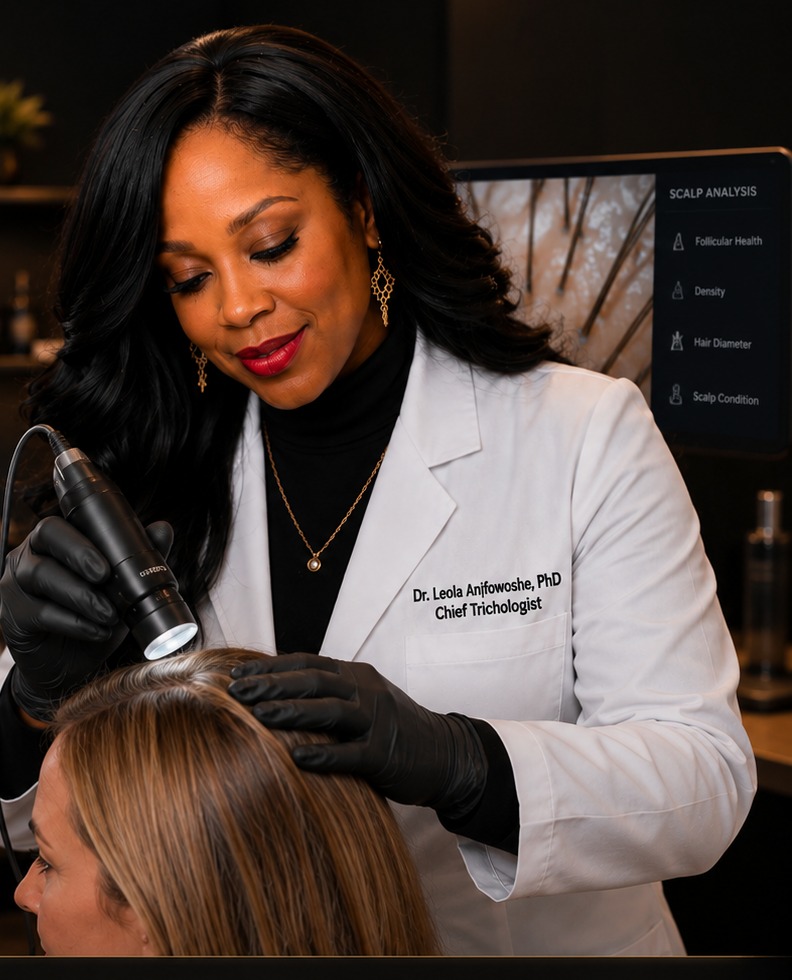
What is a trichologist? What they do & when to see one
Hair loss can feel mysterious. More strands in the shower, a widening part, thinning edges, unusual breakage, or a scalp that simply doesn't feel like it used to.
One day your hair seems normal. Then something changes. The question becomes: Who do I see to figure out what's happening?
That's where a trichologist may come in.
What is a trichologist?
A trichologist is a specialist focused on hair and scalp health and the study of factors that may contribute to shedding, thinning, breakage and scalp concerns.
Trichologists examine the hair and scalp, review the history and pattern of the concern, and consider relevant lifestyle and wellness factors that may help explain what is happening.
Hair loss is the clue. The investigation is about discovering what may be contributing to it.
That distinction matters because two people can appear to have similar thinning while the circumstances surrounding their hair loss may be very different.
Training & scope
Trichology is a dedicated study of hair and scalp — not a medical license. Some practitioners separately hold academic or healthcare credentials, which are distinct from being a physician.
Tools of the trade
Close visual examination, magnification or trichoscopy, and a thorough history — used to observe patterns, not to run medical tests or write prescriptions.
The deliverable
Investigative observations, explained in plain language, plus next steps within scope — including referral when medical evaluation is warranted.
What does a trichologist do?
A trichologist looks beyond the simple question, “What can I put on my hair?” The investigation may consider questions such as:
- When did the shedding or thinning begin?
- Was the change sudden or gradual?
- Is the hair breaking, shedding from the root, or both?
- Has the density changed?
- Are particular areas of the scalp affected?
- Are there scalp symptoms?
- Have there been recent changes involving stress, illness, medications, nutrition, weight, hormones or hairstyling practices?
- Is the pattern progressing?
A trichologist may also use magnification or trichoscopy to obtain a closer view of the scalp, hair shafts and follicular openings.
The objective isn't simply to look at the hair. It's to investigate the story the hair and scalp may be telling.
What hair and scalp concerns may bring someone to a trichologist?
People seek trichology evaluations for many reasons, including:
- excessive or unexplained shedding
- progressive thinning
- widening of the part
- reduced hair density
- fragile or thinning edges
- hair breakage
- traction-related hair loss
- suspected pattern hair loss
- persistent flaking or scalp discomfort
- changes following significant stress or illness
- hair changes associated with rapid weight loss
- changes occurring during hormonal or life-stage transitions
- concerns about CCCA or other forms of alopecia
- hair loss that simply doesn't seem to have a clear explanation
Sometimes the investigation also reveals that a concern belongs outside the trichologist's scope. An appropriate referral to a dermatologist, primary-care provider or another licensed healthcare professional can be an important part of responsible trichology.
Trichologist vs. dermatologist: what's the difference?
This is one of the most common questions people ask.
A dermatologist is a physician trained to diagnose and medically treat diseases affecting the skin, hair and nails. Dermatologists can prescribe medications, perform medical procedures and diagnose disease.
A trichologist specializes specifically in hair and scalp concerns, providing focused investigation, education and support within the trichologist's professional scope.
It doesn't have to be an either/or decision. Two different lanes can support the same destination: understanding and appropriately addressing what's happening with your hair and scalp.
In some situations, a dermatologist is the appropriate first stop. In others, a trichologist's specialized hair-and-scalp investigation may be useful. And sometimes collaboration between professionals provides the most complete picture. Read the full trichologist vs. dermatologist comparison.
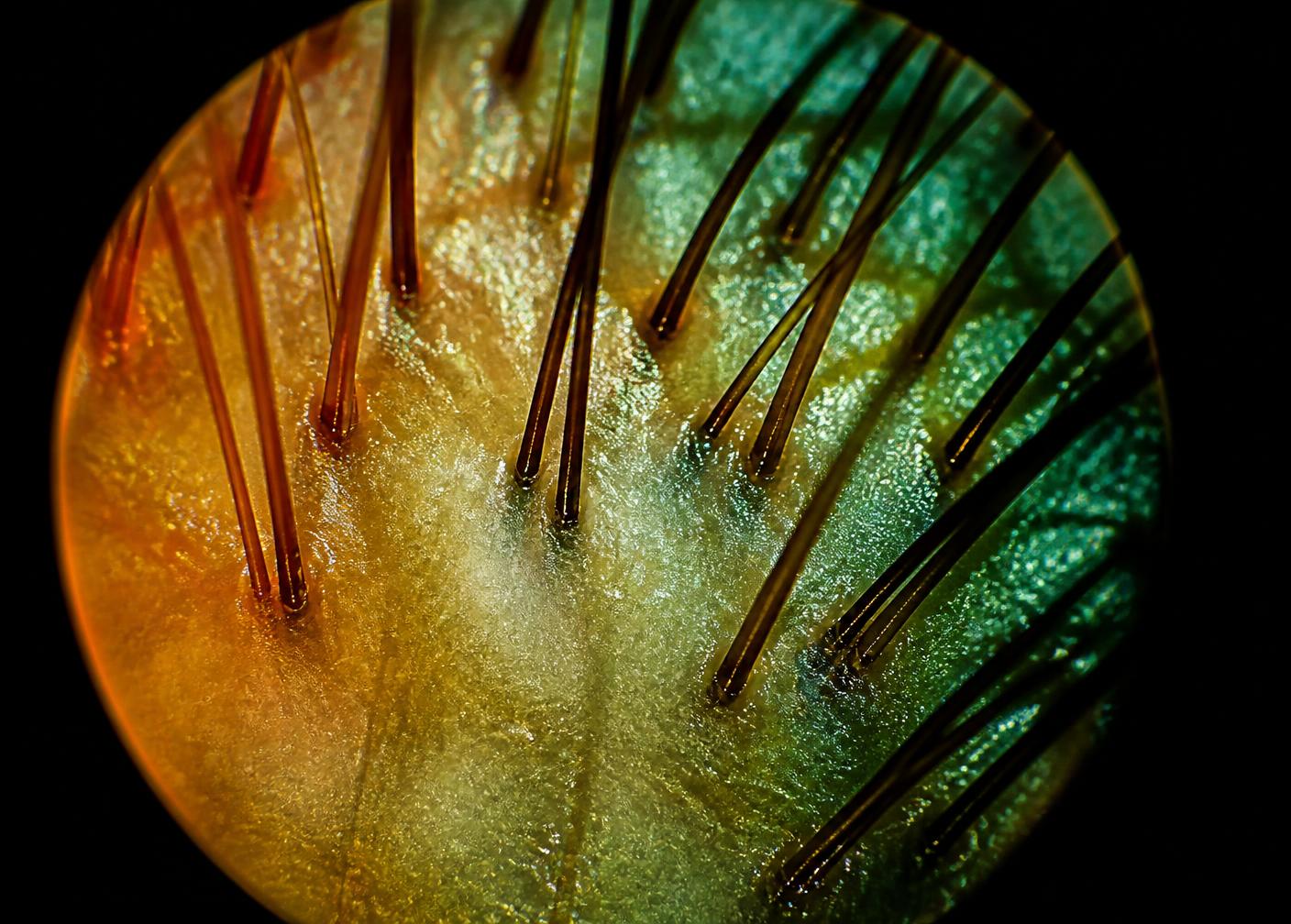
An investigation, not a five-minute visit.
A thorough consultation should involve much more than simply glancing at the thinning area. Depending on the concern and scope of practice, an evaluation may include history, hair and scalp evaluation, magnified examination, pattern recognition, a contributing-factor review, and clear next steps.
- History — when it began, what changed, how it has progressed
- Hair and scalp evaluation — distribution, shedding, breakage, visible characteristics
- Magnified examination — trichoscopy when appropriate
- Next steps — supportive options within scope, or referral when warranted
What happens during a trichology consultation?
At Texas Hair Restoration & Wellness Center, we call our philosophy Investigative Trichology™. The principle is simple: We Don't Guess — We Test™.
The proprietary systems behind that investigation remain part of our professional methodology, but the purpose is straightforward: gather better information before determining the appropriate direction.
What is trichoscopy?
Trichoscopy is the magnified examination of the hair and scalp.
It can help a trained professional observe characteristics that are difficult to appreciate with the naked eye, including differences in hair-shaft diameter, scalp appearance, follicular openings and patterns of density.
Trichoscopy does not replace medical testing or a physician's diagnosis when those are necessary. It is another investigative tool that can help provide a closer look at what's happening — see how we use it in our scalp analysis.
When should you consider seeing a trichologist?
Don't assume you have to wait until hair loss becomes severe.
Consider seeking an evaluation when you notice a meaningful change from what is normal for you, particularly if it continues. That may include a widening part, noticeably increased shedding, thinning edges, visible loss of density, persistent breakage, recurring scalp concerns or hair changes following illness, major stress, rapid weight change or hormonal transition.
Early investigation matters because your hair cannot tell you in words that something has changed. It leaves clues. And the earlier those clues are investigated, the better informed your next decision can be.
What about traction alopecia and CCCA?
Certain hair-loss concerns deserve particular attention because delaying investigation can matter.
Traction alopecia may develop when repeated tension from hairstyles places ongoing stress on vulnerable areas of the hair and scalp.
Central centrifugal cicatricial alopecia (CCCA) is a form of scarring alopecia that requires appropriate professional evaluation and may require medical management.
A trichologist can recognize concerning patterns within professional scope and refer appropriately when medical diagnosis or treatment is needed.
Can hair loss be connected to what's happening inside the body?
Sometimes.
Hair is part of the body, not an accessory sitting independently on top of it. Changes involving nutrition, significant physiological stress, illness, rapid weight loss, certain medications, hormonal transitions and other factors can coincide with changes in the hair cycle.
That doesn't mean every case of hair loss is caused by an internal problem. It means the scalp shouldn't always be investigated in isolation from the person carrying it. That's one reason a thorough history can be so valuable.
How do I find a trichologist near me?
Start by looking beyond the word trichologist itself.
Ask about the person's training, professional affiliations, experience with your particular concern, evaluation process and professional scope. You should also understand what happens if the trichologist identifies something that requires medical evaluation.
For people searching for a trichologist in Houston, Texas Hair Restoration & Wellness Center provides hair-and-scalp-focused investigative evaluations.
Frequently asked questions
Is a trichologist a doctor?
Not necessarily. Trichology itself is not a medical license. Some individuals practicing trichology may separately hold academic, healthcare or other professional credentials, but those credentials should not be confused with being a physician.
Can a trichologist diagnose alopecia?
A trichologist can evaluate hair and scalp characteristics and recognize patterns of concern within professional scope. A medical diagnosis should be made by an appropriately licensed medical professional when diagnosis is required.
Can a trichologist help investigate hair loss?
Yes. Hair-loss investigation is a central focus of trichology. A trichologist may examine the pattern and history of hair loss and relevant contributing factors and determine when additional professional or medical evaluation should be considered.
What is the difference between a trichologist and a dermatologist?
A dermatologist is a physician who diagnoses and medically treats conditions involving the skin, hair and nails. A trichologist specializes specifically in hair and scalp concerns within the scope of trichology. Depending on the situation, one or both may be appropriate.
What happens at a trichology consultation?
The process may include a detailed history, examination of the hair and scalp, magnification or trichoscopy when appropriate, discussion of relevant contributing factors and recommendations for next steps or referral.
Do I need severe hair loss before seeing a trichologist?
No. A persistent change in shedding, density, scalp condition, edges, part width or hair behavior may justify investigation before the problem becomes advanced.
How do I find a trichologist near me?
Look for a trichologist who examines the hair and scalp under magnification, reviews your history and contributing factors, and explains next steps in plain language. In the Houston area, Trichologist Dr. Leola Anifowoshe-Brown, PhD sees clients at Texas Hair Restoration & Wellness Center at 13201 Northwest Freeway, Suite 512, Houston, Texas 77040.
Where can I see a hair loss specialist in Houston?
Texas Hair Restoration & Wellness Center — Home of The Hair Loss Detective™ — serves Houston, Cypress, Katy, Spring, Sugar Land and the surrounding areas. You can begin with a complimentary 15-minute phone consultation, a Zoom consultation, or an in-person visit in Houston.
Dr. Leola Anifowoshe-Brown, PhD is Chief Holistic Trichologist at Texas Hair Restoration & Wellness Center and founder of The Hair Loss Detective™.
Her work centers on Investigative Trichology™ — an approach built around asking a better question than simply “What should I put on my hair?” The question is: Why is this happening?
Because when hair begins changing, covering up the clue isn't the same as investigating the case. Don't hesitate to investigate — because you don't want to say, “I waited too late.”
View Author ProfileYour hair loss has a reason. Let's investigate it.
If you're experiencing unexplained shedding, thinning, changes in your edges, reduced density or persistent scalp concerns, the next step doesn't have to begin with guessing. It can begin with an investigation.
We Don't Guess — We Test™.
Not sure whether to start with us or a physician? Our decision guide can help, or you can review your consultation options.
The Hair Loss Detective™ provides comprehensive non-medical investigative trichology assessments focused on hair and scalp wellness. Based on your history, scalp examination, digital imaging and investigative findings, Trichologist Dr. Leola Anifowoshe may identify hair loss patterns that appear consistent with known forms of hair loss. These are investigative observations — not medical diagnoses. They guide your personalized Hair Recovery Blueprint™. Trichologist Dr. Leola Anifowoshe, PhD is a certified trichologist, not a physician; medical diagnosis and prescriptions sit outside our scope. Individual results vary.
Your hair loss has a reason.
Let's find it.
Choose the visit that fits you — a complimentary 15-minute call, Zoom, or in person in Houston — and book a real time on our calendar.
Schedule Your Consultation