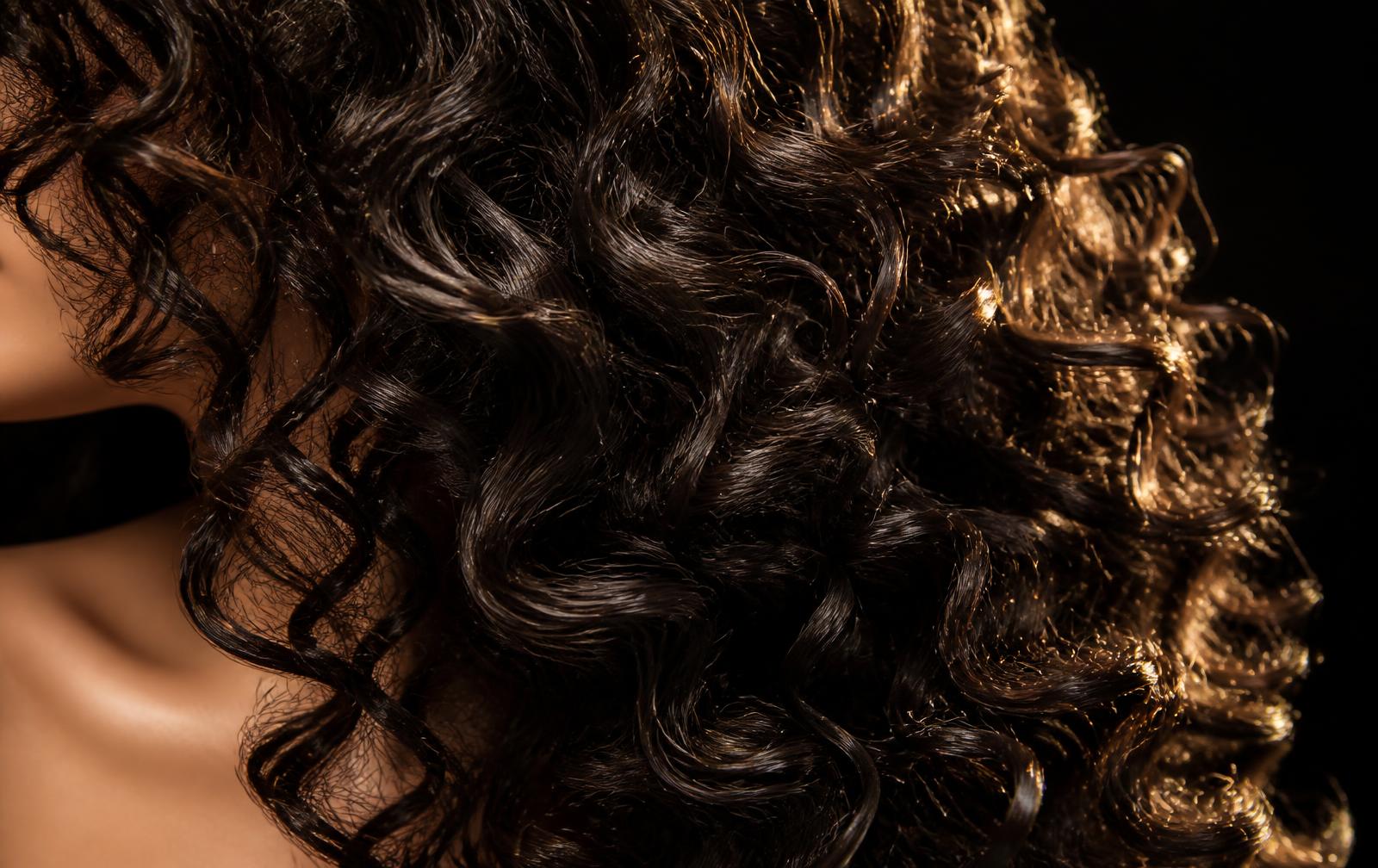
Wash day, step by step
Start by loosening any style and finger-separating the hair before it gets wet. Saturate thoroughly with warm — not hot — water. Cleanse the scalp with fingertips, letting the suds rinse down the lengths rather than scrubbing the ends.
Condition next, generously, through the mid-lengths and ends. Let it sit while you section the hair. Then detangle each section from the ends upward with fingers and a wide-tooth comb, and twist or braid each finished section loosely so it stays put.
Rinse, blot with a soft t-shirt or microfiber towel rather than rubbing with terry cloth, and style while the hair is still damp.
Between wash days
Mist the hair lightly with a detangling and moisture spray before any combing. Re-braid or re-twist loosely at night. Avoid re-styling from scratch every morning — that daily manipulation is where fragile hair gets lost.
This is the whole Little Roots™ routine: Wash Me™ to cleanse, Love Me UnConditionerLy™ to condition, Untangle Me™ to refresh and detangle. Little Roots™ is a cosmetic children's hair care collection from TrichoLogics®. It is intended to cleanse, moisturize, detangle and improve manageability — it is not intended to diagnose, prevent, treat or cure hair loss or any hair or scalp condition.
Nighttime is half the routine
Eight hours of friction against a cotton pillowcase undoes a lot of careful wash-day work. A satin bonnet, scarf or pillowcase reduces that friction and holds moisture in the hair. For children who won't keep a bonnet on, a satin pillowcase does most of the job on its own.
Loose braids or twists at night also keep the hair from tangling into itself while a child moves.
Habits worth dropping
Dry combing. Brushing curls. Daily tight ponytails. Elastics with metal fittings. Heat styling on young hair. Styles worn until they're grown out and pulling. Skipping conditioner because you're in a hurry.
Removing those does more for a child's hair than adding any product.
When routine isn't the answer
If a child has unexplained bald patches, sudden or heavy shedding, broken hairs confined to one area, scalp redness, flaking, sores, itching or pain, that deserves professional evaluation rather than another product. Start with the child's pediatrician or a dermatologist; a trichologist can look closely at the hair and scalp alongside that care.
A routine improves hair care. It does not treat hair loss, and it isn't a substitute for having a concerning scalp looked at.
- Cleanse, condition, detangle — in that order, every wash day.
- Refresh moisture between washes so hair is never combed dry.
- Satin at night protects more hair than any product does.
- Consistency over months is what produces visible length.
Cleanse gently on a consistent schedule, condition every wash, detangle damp in sections from the ends up, refresh moisture between washes, and protect the hair with satin at night. Keep it simple enough to repeat.
Understanding your own hair begins with an investigation.
Trichologist Dr. Leola Anifowoshe-Brown, PhD
- Founder, Texas Hair Restoration & Wellness Center
- Founder, Capillorum Institute™
- Creator of Investigative Trichology™
- Author of The Hair Loss Detective
- PhD in Organizational Leadership and Development
- Doctorate in Christian Counseling
- Harvard Medical School Executive Education (Certificate Programs)
- Certified Trichologist
New educational resources, delivered quietly.
Join our reader list for new articles on hair and scalp health. Education only — no pressure, and you can unsubscribe any time.
Trichologist Dr. Leola Anifowoshe-Brown, PhD is available for television interviews, podcasts, print media, conferences, speaking engagements and educational commentary on Hair Loss, Scalp Health, Investigative Trichology™, Hair Restoration, Women's Hair Loss, Men's Hair Loss, Hair Health Education.
This article is provided for educational purposes only and is not intended to diagnose, treat, cure, or prevent any disease. HairInvestigations.com provides evidence-informed, holistic, non-medical educational resources. Individuals experiencing hair loss or scalp concerns should consult the appropriate qualified healthcare professional.