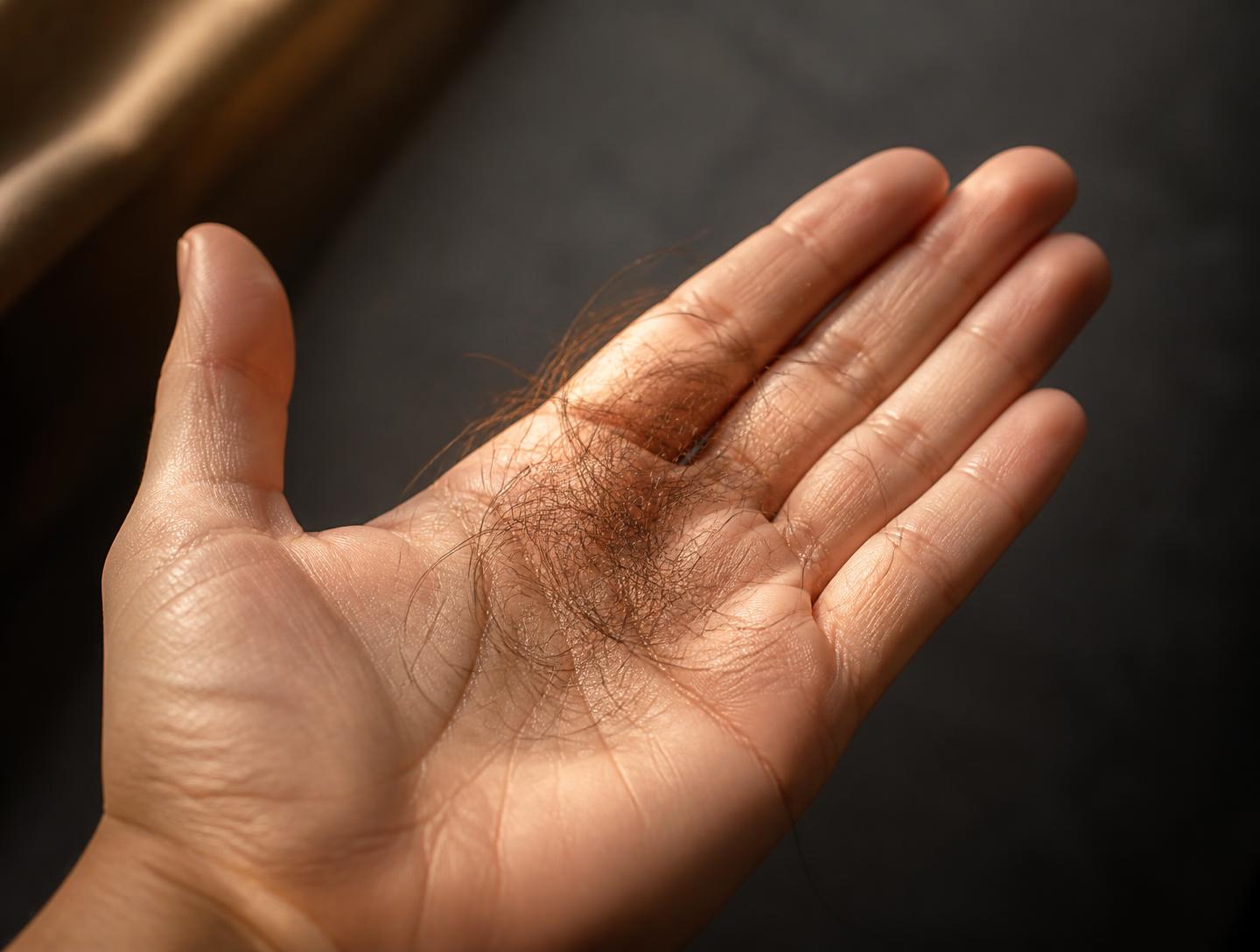
Why weight loss and hair loss are connected at all
Any rapid, significant change to the body — whether from bariatric surgery, an aggressive diet, illness, or a medication-supported weight loss journey — can act as a physical stressor. The body, in a sense, reads sudden and dramatic change as something to respond to, and one common response is shifting a larger number of hair follicles into their resting phase earlier than they normally would.
This is called telogen effluvium, and it's one of the most common — and most misunderstood — forms of hair shedding we see.
The confusing two-to-four-month delay
Here's the part that trips almost everyone up: the shedding doesn't happen during the weight loss itself. It typically shows up two to four months after the triggering event, once those resting-phase follicles finally release their strands. By the time the shedding is noticeable, many people have moved on from thinking about "the diet" and are searching for an entirely unrelated cause.
Reconstructing this timeline — looking back several months to identify what actually changed — is often the single most clarifying step in understanding this type of hair loss.
Nutrition gaps compound the picture
Rapid weight loss often comes with reduced caloric intake, and depending on the method, sometimes reduced protein, iron, or other micronutrients that hair follicles depend on to stay in their growth phase. This nutritional gap can compound the stress-driven shedding, making it more pronounced or prolonged than it might otherwise be.
This is one of the more addressable parts of the equation — not by abandoning your weight loss goals, but by making sure your intake supports your hair alongside them.
The good news, and where we come in
For most people, this type of shedding is temporary. As the body stabilizes and nutrient intake normalizes, the growth cycle typically returns to its usual rhythm over the following months. That said, watching your hair thin for months while waiting for things to "even out" is genuinely hard, and it deserves more than a shrug.
We investigate the timeline, the scalp, and the nutritional picture together so you're not just waiting blindly — you're understanding what's actually happening and what can realistically support recovery along the way.
Our holistic trichology evaluations investigate potential contributors to hair and scalp concerns and complement the care of licensed healthcare professionals when medical evaluation or treatment is appropriate.
There's no exact threshold, but shedding is more commonly reported after loss that's both rapid and substantial — generally more than 15-20 pounds in a short window, though individual sensitivity varies.
Understanding your own hair begins with an investigation.
Trichologist Dr. Leola Anifowoshe-Brown, PhD
- Founder, Texas Hair Restoration & Wellness Center
- Founder, Capillorum Institute™
- Creator of Investigative Trichology™
- Author of The Hair Loss Detective
- PhD in Organizational Leadership and Development
- Doctorate in Christian Counseling
- Harvard Medical School Executive Education (Certificate Programs)
- Certified Trichologist
New educational resources, delivered quietly.
Join our reader list for new articles on hair and scalp health. Education only — no pressure, and you can unsubscribe any time.
Trichologist Dr. Leola Anifowoshe-Brown, PhD is available for television interviews, podcasts, print media, conferences, speaking engagements and educational commentary on Hair Loss, Scalp Health, Investigative Trichology™, Hair Restoration, Women's Hair Loss, Men's Hair Loss, Hair Health Education.
This article is provided for educational purposes only and is not intended to diagnose, treat, cure, or prevent any disease. HairInvestigations.com provides evidence-informed, holistic, non-medical educational resources. Individuals experiencing hair loss or scalp concerns should consult the appropriate qualified healthcare professional.