Why hair is so sensitive to nutrition
Hair follicles are metabolically active but biologically non-essential, meaning that when the body is dealing with a nutrient shortfall, it will prioritize vital organs and functions long before it prioritizes hair growth. This is precisely why hair thinning is often one of the earliest visible signs of an underlying nutritional gap, even before other symptoms show up.
It also means that by the time hair changes are noticeable, the underlying nutritional issue may have been developing for a while — hair simply takes longer to reflect the change because of its own growth cycle timeline.
The nutrients that come up again and again
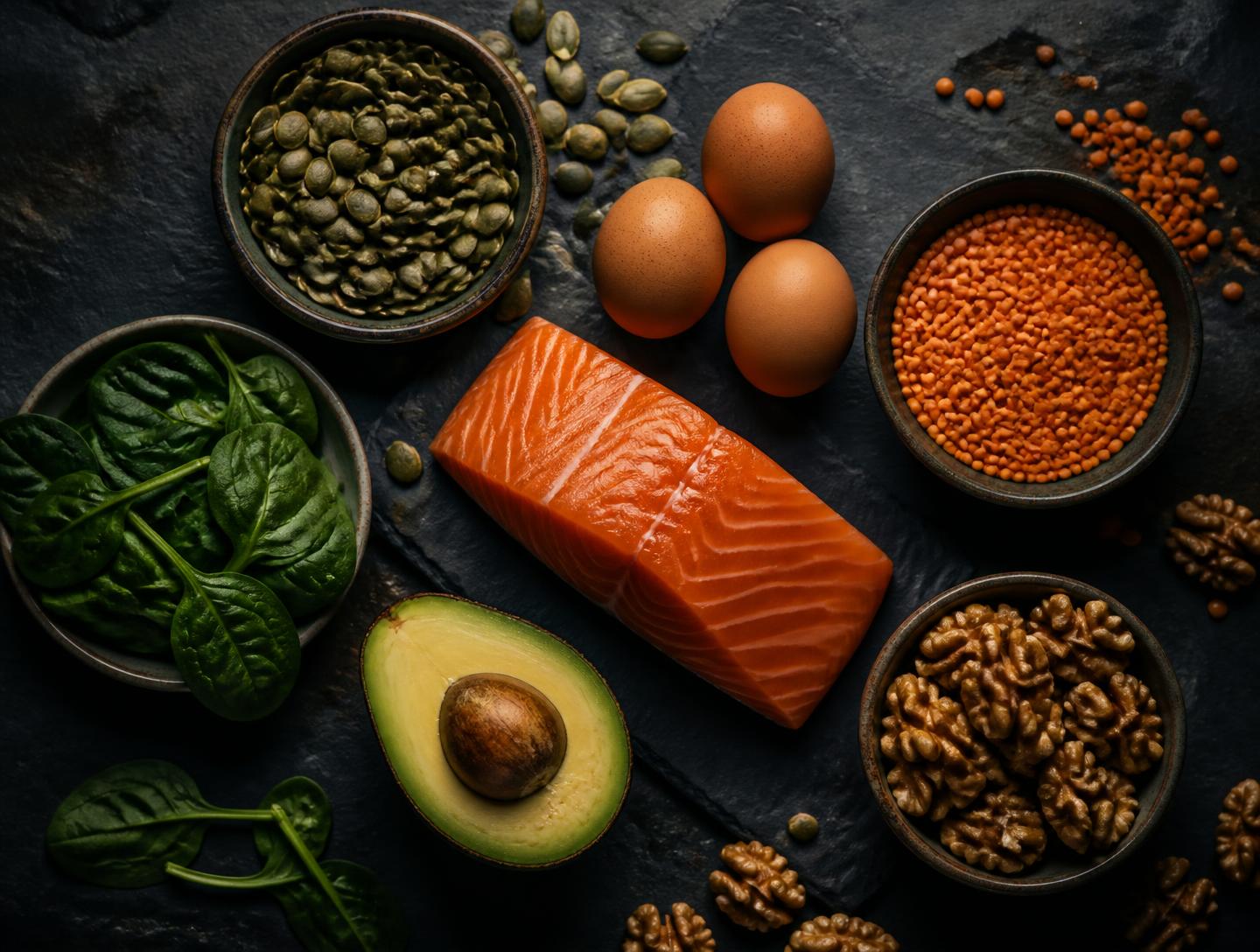
Iron deficiency is one of the most common nutritional contributors to hair thinning, particularly in women with heavier menstrual cycles or those following diets lower in iron-rich foods. Protein is another big one — hair is largely made of a protein called keratin, and chronically low protein intake, whether from restrictive dieting or reduced appetite, can measurably affect hair structure and growth.
Beyond those two, zinc, vitamin D, and B vitamins including biotin come up frequently in nutritional conversations about hair, though it's worth being cautious here: supplementing a nutrient you're not actually deficient in rarely helps and, in some cases, can even work against you.
Why the supplement aisle oversimplifies this
Walk into any store and you'll find a wall of hair vitamins promising thicker, fuller hair, most of which contain a broad blend of nutrients regardless of what any individual person actually needs. If your hair thinning is driven by a genetic pattern, a hormonal shift, or a scalp condition rather than a nutrient gap, a general hair vitamin is unlikely to move the needle much, no matter how appealing the packaging.
The far more useful question isn't "which supplement should I take" — it's "is nutrition actually a meaningful factor in my specific case, and if so, which nutrient." That's a very different, more targeted conversation.
How we approach nutrition in an investigation
We look at diet and eating patterns as one thread among several when investigating a case, alongside scalp condition, timeline, and life history, rather than assuming nutrition is either the whole answer or irrelevant.
Our holistic trichology evaluations investigate potential contributors to hair and scalp concerns and complement the care of licensed healthcare professionals when medical evaluation or treatment is appropriate.
If you've been cycling through hair vitamins for months without much change, that's often a sign the real driver lies somewhere else — and that's worth actually investigating rather than trying yet another bottle.
Biotin deficiency is genuinely rare in people eating a varied diet, and supplementing biotin when you're not deficient typically doesn't produce noticeable hair improvement. It can also interfere with certain lab tests, which is worth mentioning to any healthcare provider ordering bloodwork.
Understanding your own hair begins with an investigation.
Trichologist Dr. Leola Anifowoshe-Brown, PhD
- Founder, Texas Hair Restoration & Wellness Center
- Founder, Capillorum Institute™
- Creator of Investigative Trichology™
- Author of The Hair Loss Detective
- PhD in Organizational Leadership and Development
- Doctorate in Christian Counseling
- Harvard Medical School Executive Education (Certificate Programs)
- Certified Trichologist
New educational resources, delivered quietly.
Join our reader list for new articles on hair and scalp health. Education only — no pressure, and you can unsubscribe any time.
Trichologist Dr. Leola Anifowoshe-Brown, PhD is available for television interviews, podcasts, print media, conferences, speaking engagements and educational commentary on Hair Loss, Scalp Health, Investigative Trichology™, Hair Restoration, Women's Hair Loss, Men's Hair Loss, Hair Health Education.
This article is provided for educational purposes only and is not intended to diagnose, treat, cure, or prevent any disease. HairInvestigations.com provides evidence-informed, holistic, non-medical educational resources. Individuals experiencing hair loss or scalp concerns should consult the appropriate qualified healthcare professional.