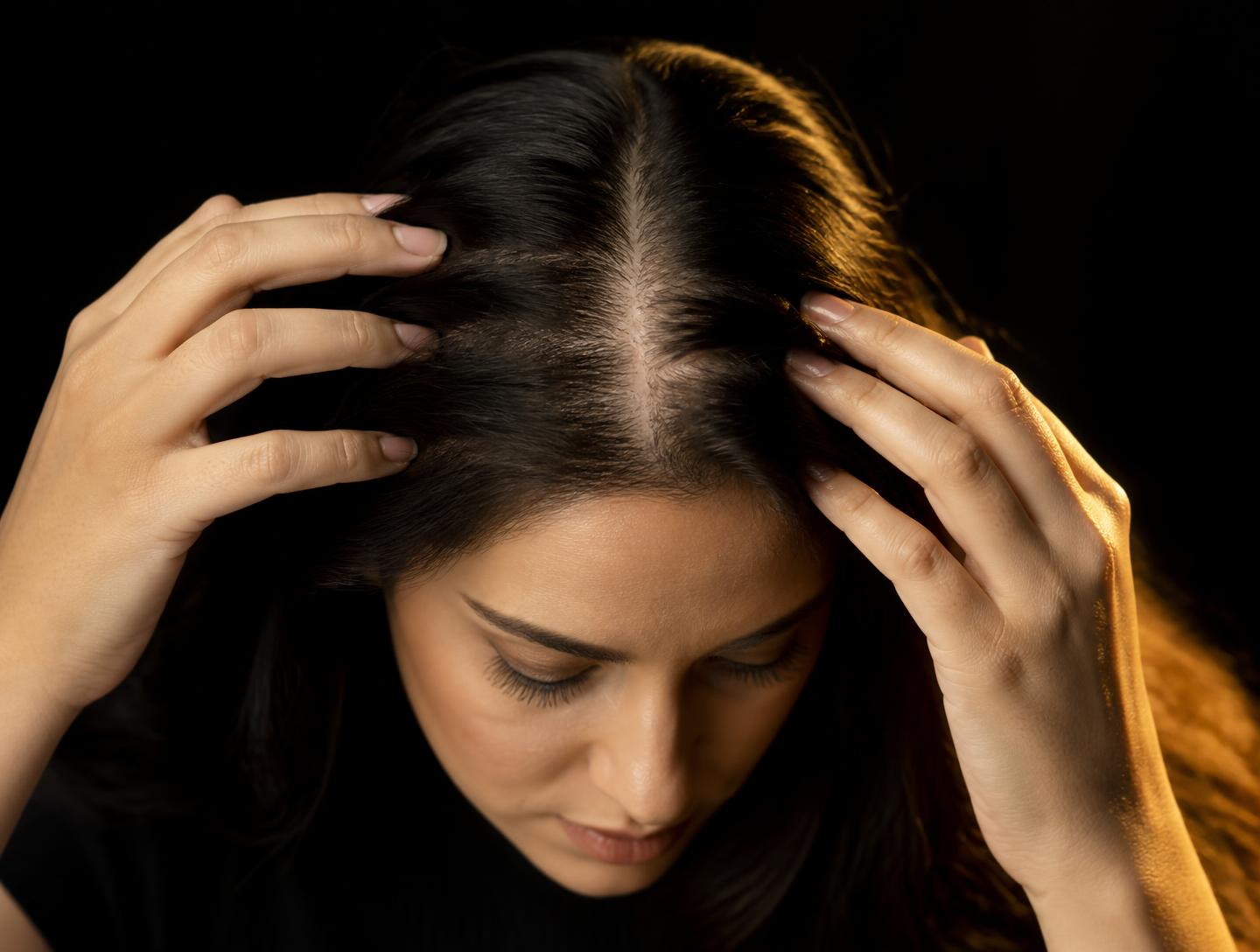
Hormones set the rhythm of the growth cycle
Hair growth is regulated in part by a rotating cast of hormones — estrogen, progesterone, thyroid hormones, and androgens like testosterone and its more potent derivative DHT — all of which influence how long a follicle stays in its growth phase versus shifting toward resting and shedding. When any of these hormones shift meaningfully, whether from a life stage, a medical condition, or a medication, the hair growth rhythm can shift right along with it.
This is why hormonal hair loss doesn't look like one single thing. Depending on which hormone is involved and how, it can show up as diffuse thinning, crown-focused thinning, or a pattern that closely resembles genetic hair loss.
Thyroid function deserves more attention than it gets
Both an underactive and an overactive thyroid can significantly affect hair growth, sometimes producing hair that feels thin, brittle, or is shedding more than usual across the entire scalp rather than in a specific pattern. Thyroid-related hair changes are often accompanied by other symptoms — fatigue, weight changes, temperature sensitivity, mood shifts — that are worth mentioning to a physician alongside any hair concerns.
Because thyroid issues are common, often underdiagnosed, and highly treatable once identified, this is one of the areas where we most actively encourage coordinated care between our investigation and a client's physician.
Androgens and genetically sensitive follicles
In people genetically predisposed to pattern hair loss, follicles in certain areas of the scalp — the crown and hairline in men, the crown and part line in women — can be particularly sensitive to androgens like DHT, gradually shrinking, or miniaturizing, the follicle over successive growth cycles. This is why genetic hair loss tends to progress slowly rather than happening all at once, and why hormonal transitions that shift androgen balance, like menopause, can accelerate an already-present genetic tendency.
It's worth understanding that having "normal" hormone levels on a lab test doesn't rule out hormone-related hair changes — it's often about how sensitive an individual's specific follicles are to those hormones, not just the raw numbers.
Why we always ask about the hormonal timeline
In nearly every consultation, we ask detailed questions about hormonal history — menstrual cycle changes, pregnancy and postpartum, thyroid history, menopause status, any recent medication changes — because this thread runs through so many cases, even ones that initially seem unrelated to hormones at all.
Our holistic trichology evaluations investigate potential contributors to hair and scalp concerns and complement the care of licensed healthcare professionals when medical evaluation or treatment is appropriate.
Not entirely — some people experience hair changes even with lab values considered within normal range, and thyroid function can also fluctuate over time. It's still worth discussing directly with your physician if hair thinning is a concern.
Understanding your own hair begins with an investigation.
Trichologist Dr. Leola Anifowoshe-Brown, PhD
- Founder, Texas Hair Restoration & Wellness Center
- Founder, Capillorum Institute™
- Creator of Investigative Trichology™
- Author of The Hair Loss Detective
- PhD in Organizational Leadership and Development
- Doctorate in Christian Counseling
- Harvard Medical School Executive Education (Certificate Programs)
- Certified Trichologist
New educational resources, delivered quietly.
Join our reader list for new articles on hair and scalp health. Education only — no pressure, and you can unsubscribe any time.
Trichologist Dr. Leola Anifowoshe-Brown, PhD is available for television interviews, podcasts, print media, conferences, speaking engagements and educational commentary on Hair Loss, Scalp Health, Investigative Trichology™, Hair Restoration, Women's Hair Loss, Men's Hair Loss, Hair Health Education.
This article is provided for educational purposes only and is not intended to diagnose, treat, cure, or prevent any disease. HairInvestigations.com provides evidence-informed, holistic, non-medical educational resources. Individuals experiencing hair loss or scalp concerns should consult the appropriate qualified healthcare professional.