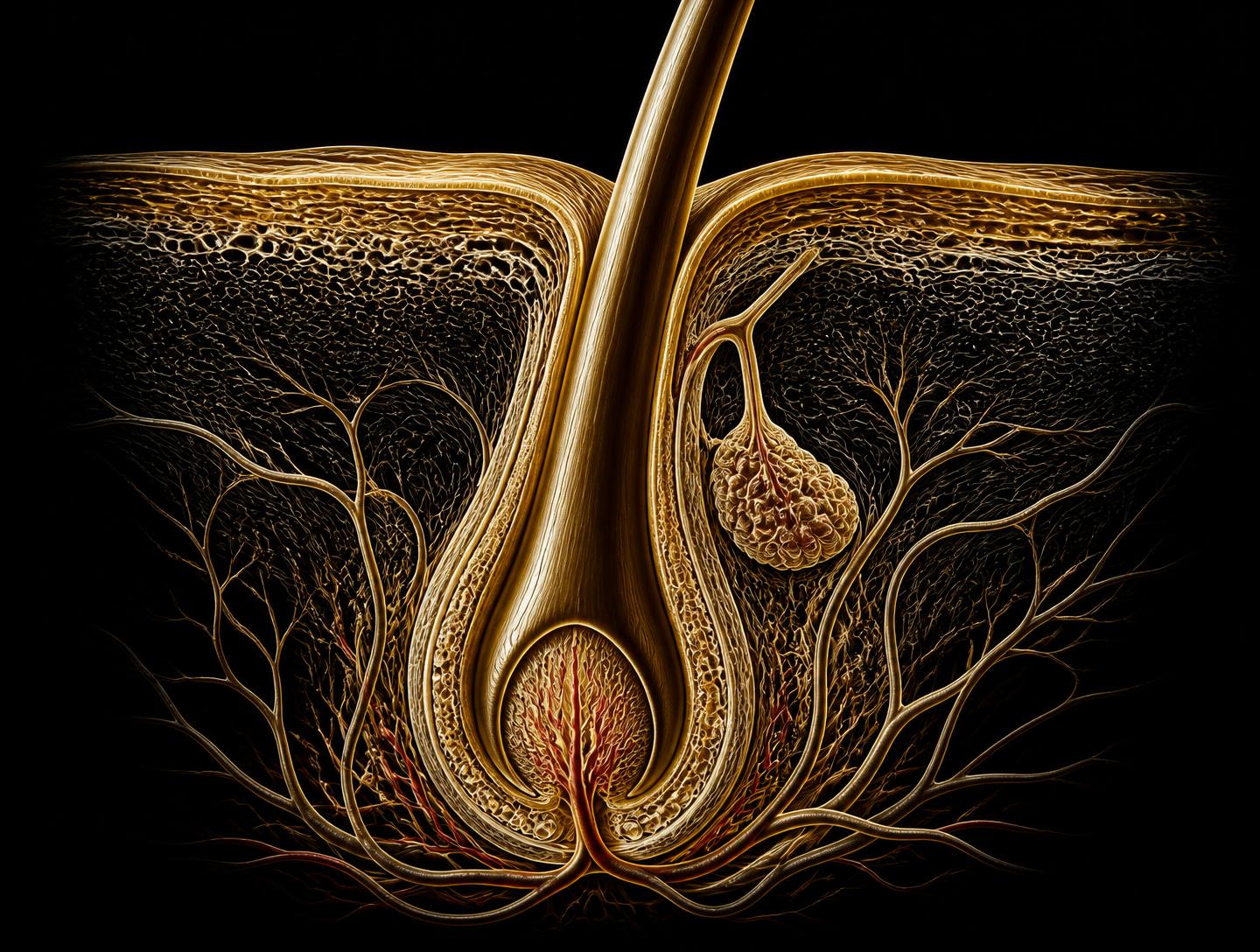
There is rarely one single cause
If you've spent any time searching "what causes hair loss," you've probably landed on a dozen different answers — genetics, stress, hormones, diet, a new medication, even the way you wear your ponytail. The frustrating truth is that most of those answers are correct, at least partially. Hair loss is almost never the result of one tidy cause; it's usually a layered story where two or three contributors are compounding each other at once.
We think of it like a case file rather than a diagnosis. A woman in her late thirties might be dealing with a genetic predisposition toward thinning at the crown, a stressful year that pushed more hairs into a resting phase, and a diet that's quietly low on iron. None of those three things alone would necessarily cause noticeable shedding. Together, they can add up to a ponytail that suddenly feels thinner than it used to.
This is exactly why generic advice — take this vitamin, use this shampoo — so often falls flat. It's treating one possible thread in a much bigger tapestry without ever looking at the whole picture.
The major categories worth understanding
Genetic thinning, often called androgenetic alopecia, is the most common pattern and tends to show up as gradual miniaturization of hair along the crown or hairline. It's inherited, progressive, and often runs in families on either side.
Hormonal shifts — puberty, pregnancy, postpartum, perimenopause, menopause, thyroid changes — can all move hair follicles out of their normal growth rhythm. Because hair has its own multi-month growth cycle, a hormonal event today can show up as shedding two to four months later, which is part of why the timeline is so confusing for most people.
Then there are the everyday-life contributors: chronic stress, crash dieting or rapid weight loss, nutritional gaps (iron, protein, vitamin D, zinc are common ones we ask about), certain medications, and scalp conditions like inflammation, buildup, or tension from tight hairstyles. Any one of these can tip a scalp that was otherwise coasting along fine into a visible shedding phase.
Why timing feels so mismatched
One of the most disorienting parts of hair loss is that the trigger and the symptom rarely show up together. A hair follicle can sit in a resting phase for two to three months before the strand actually releases. That means the stressful month, the illness, the medication change, or the crash diet that set things in motion may already feel like old news by the time you notice extra hair on your pillow or in the shower drain.
This delay is one of the biggest reasons people misdiagnose their own hair loss. They blame the shampoo they started using last week, when the real trigger happened back in the fall. Untangling that timeline — what actually happened three to four months before the shedding started — is often the single most useful piece of detective work in understanding a case.
Why we call it an investigation, not a diagnosis
At Texas Hair Restoration & Wellness Center, home of The Hair Loss Detective™, we built our entire approach around this reality. Dr. Leola Anifowoshe, PhD, is a certified trichologist who treats every case like an open file — looking at scalp condition, hair growth patterns, life history, and the timeline of when changes actually started, rather than reaching for a single generic explanation.
Our holistic trichology evaluations investigate potential contributors to hair and scalp concerns and complement the care of licensed healthcare professionals when medical evaluation or treatment is appropriate.
If you're standing in front of the mirror wondering what's actually behind your hair changes, the most productive next step isn't another supplement or serum — it's an actual look at your scalp and your history. That's the entire premise of a Hair Investigation.
It depends heavily on the cause and how early it's addressed. Shedding tied to a temporary trigger like stress, illness, or a nutrient gap often improves significantly once the underlying contributor is addressed. Genetic thinning behaves differently and tends to respond best to consistent, early attention rather than a single fix.
Understanding your own hair begins with an investigation.
Trichologist Dr. Leola Anifowoshe-Brown, PhD
- Founder, Texas Hair Restoration & Wellness Center
- Founder, Capillorum Institute™
- Creator of Investigative Trichology™
- Author of The Hair Loss Detective
- PhD in Organizational Leadership and Development
- Doctorate in Christian Counseling
- Harvard Medical School Executive Education (Certificate Programs)
- Certified Trichologist
New educational resources, delivered quietly.
Join our reader list for new articles on hair and scalp health. Education only — no pressure, and you can unsubscribe any time.
Trichologist Dr. Leola Anifowoshe-Brown, PhD is available for television interviews, podcasts, print media, conferences, speaking engagements and educational commentary on Hair Loss, Scalp Health, Investigative Trichology™, Hair Restoration, Women's Hair Loss, Men's Hair Loss, Hair Health Education.
This article is provided for educational purposes only and is not intended to diagnose, treat, cure, or prevent any disease. HairInvestigations.com provides evidence-informed, holistic, non-medical educational resources. Individuals experiencing hair loss or scalp concerns should consult the appropriate qualified healthcare professional.