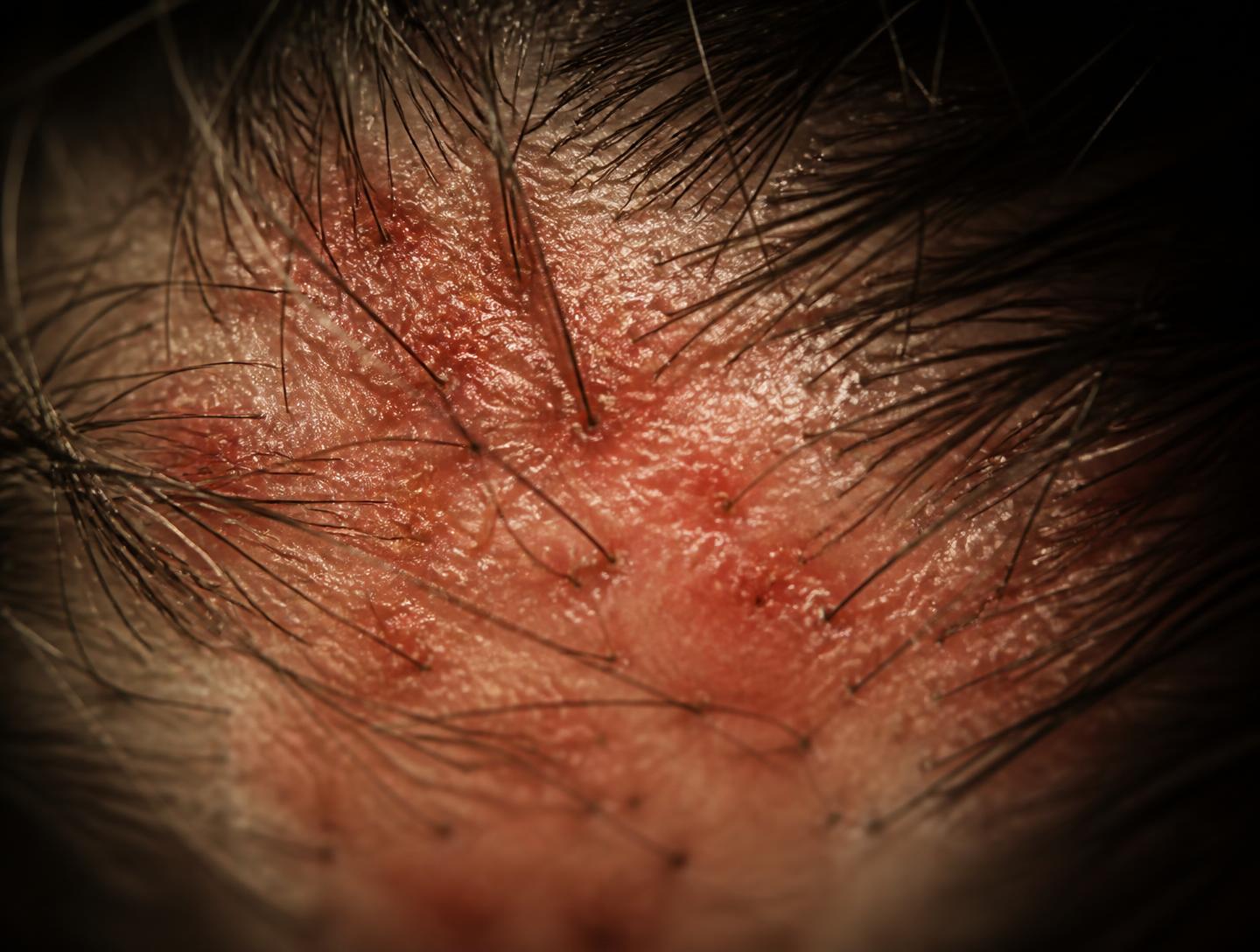
Why the scalp matters as much as the hair itself
It's easy to think of hair loss as a problem with the hair strands themselves, but the strand is really just the visible output of what's happening down at the follicle, embedded in the skin of the scalp. If that skin environment is inflamed, irritated, or under chronic stress, the follicle sitting inside it is going to struggle to produce strong, healthy growth, no matter what products are applied to the hair above the surface.
This is why we spend so much time actually looking at the scalp itself during an investigation, rather than only asking questions about the hair.
Common signs of an inflamed scalp
Persistent itching, redness, flaking, tenderness to the touch, a burning or tingling sensation, or visible bumps can all signal that something is irritating the scalp's skin. Conditions like seborrheic dermatitis, folliculitis, psoriasis, and contact irritation from certain hair products can all present with these kinds of symptoms, and they're more common than most people realize.
Sometimes the signs are subtler — a scalp that just feels "off" or unusually sensitive, without dramatic redness or flaking. Those quieter presentations are just as worth paying attention to.
How inflammation interferes with hair growth
Inflammation at or around the follicle can disrupt the normal growth cycle, sometimes pushing follicles into their resting phase prematurely or, in some chronic conditions, contributing toward scarring if left unaddressed over a long enough period. This is part of why scalp inflammation shows up as a contributing factor across so many different types of hair loss cases — genetic, stress-related, and scarring alike — rather than being its own isolated category.
In some cases, addressing scalp inflammation is one of the more meaningfully actionable pieces of an otherwise complex case, because unlike genetics, it's something that can often be actively improved.
Why we look here first, not last
A close look at the scalp itself — not just the hair coming out of it — is one of the earliest and most revealing steps in a proper Hair Investigation. So much of what's driving a person's hair changes is visible right there on the surface of the skin, if you know what you're looking for.
Our holistic trichology evaluations investigate potential contributors to hair and scalp concerns and complement the care of licensed healthcare professionals when medical evaluation or treatment is appropriate.
Chronic itching and irritation are often signs of underlying inflammation, which can interfere with normal hair growth over time, especially if the underlying cause goes unaddressed for months or years.
Understanding your own hair begins with an investigation.
Trichologist Dr. Leola Anifowoshe-Brown, PhD
- Founder, Texas Hair Restoration & Wellness Center
- Founder, Capillorum Institute™
- Creator of Investigative Trichology™
- Author of The Hair Loss Detective
- PhD in Organizational Leadership and Development
- Doctorate in Christian Counseling
- Harvard Medical School Executive Education (Certificate Programs)
- Certified Trichologist
New educational resources, delivered quietly.
Join our reader list for new articles on hair and scalp health. Education only — no pressure, and you can unsubscribe any time.
Trichologist Dr. Leola Anifowoshe-Brown, PhD is available for television interviews, podcasts, print media, conferences, speaking engagements and educational commentary on Hair Loss, Scalp Health, Investigative Trichology™, Hair Restoration, Women's Hair Loss, Men's Hair Loss, Hair Health Education.
This article is provided for educational purposes only and is not intended to diagnose, treat, cure, or prevent any disease. HairInvestigations.com provides evidence-informed, holistic, non-medical educational resources. Individuals experiencing hair loss or scalp concerns should consult the appropriate qualified healthcare professional.