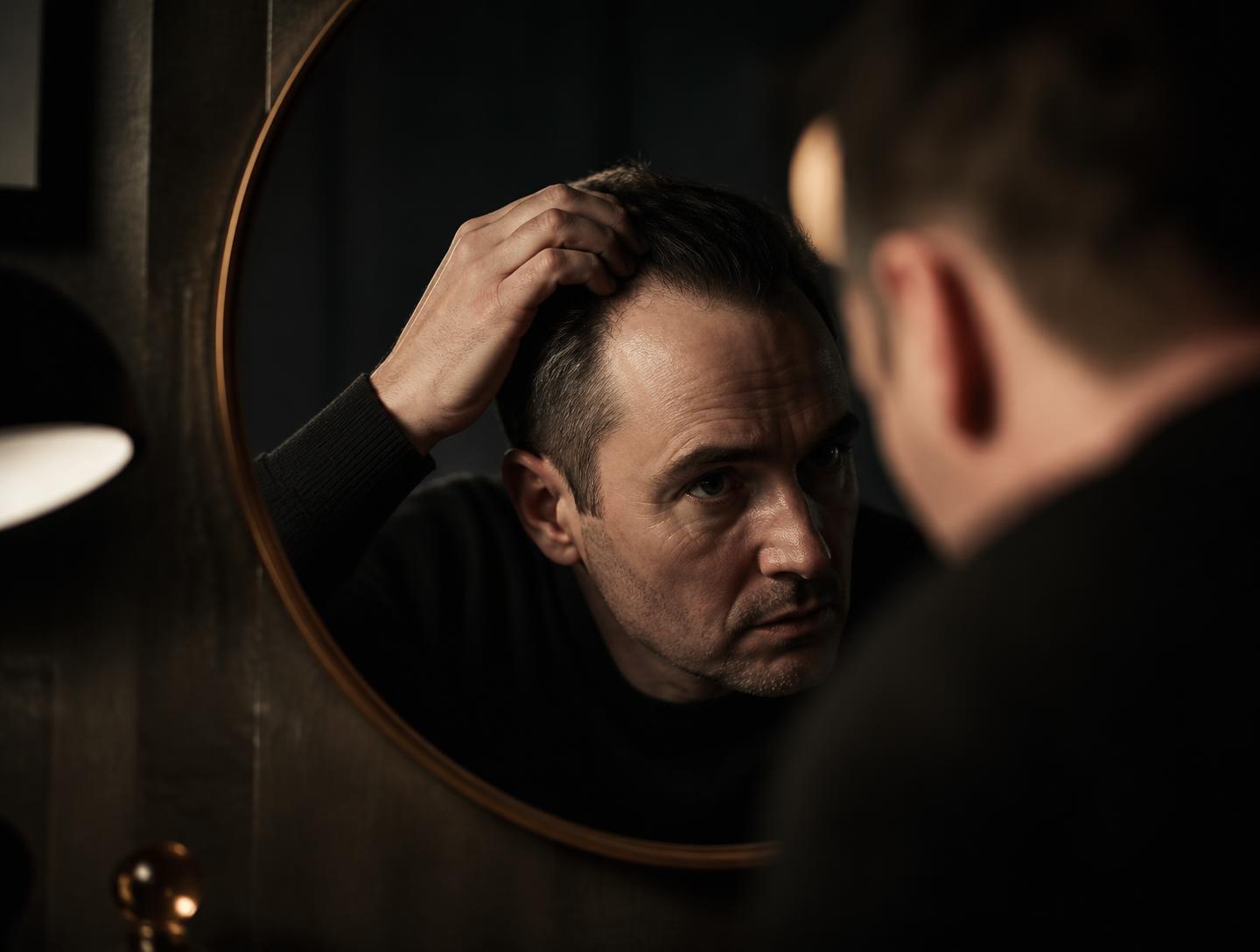
Start with the timeline, not the panic
The instinct when you notice thinning is to jump straight to worst-case conclusions or start buying products immediately. A more useful first step is actually mapping out a timeline: when did you first notice it, has it been gradual or sudden, and what was happening in your life three to six months before you noticed — illness, major stress, a new medication, a significant diet change, pregnancy, or a hormonal shift.
This single exercise, walking backward through the last several months, resolves a surprising number of mystery cases before any formal evaluation even happens, simply because of how delayed hair's response to triggers tends to be.
Look at the pattern, not just the amount
Is the thinning concentrated at your crown, your part line, or your hairline, or does it feel more spread out across your whole scalp? A widening part with intact hairline often points toward a genetic pattern. Diffuse thinning across the whole scalp more often suggests a triggered shedding event tied to stress, illness, or a nutritional gap. Thinning specifically at the edges or hairline can point toward tension-related causes, particularly with certain styling histories.
None of these patterns are a definitive diagnosis on their own — they're clues, the kind that make an actual scalp evaluation far more productive than guessing from a mirror.
Check the obvious life factors honestly
Have you recently lost or gained significant weight? Started or stopped a medication? Gone through a major stressful event? Had a baby? Noticed changes in your period or entered perimenopause? Been wearing the same tight hairstyle for months or years without variation? Been eating significantly less than usual, whether from a new diet, appetite changes, or a busy season of life?
It's tempting to dismiss these questions as too obvious, but in our experience, the answer is often sitting in plain sight — just separated from the hair thinning by a confusing few months of delay.
When to move from self-investigation to a real one
If your self-review points toward an obvious, resolving trigger — a stressful month that's now behind you, for example — some patience and attention to the basics may be all that's needed. But if the thinning is progressive, if you can't identify a clear trigger, if it's accompanied by scalp symptoms like itching or tenderness, or if it's simply been going on for more than a few months without improvement, that's the point where a proper investigation is worth far more than continued guessing.
That's the entire reason our Hair Investigation™ exists — to take you from "why is my hair thinning" to an actual, individualized understanding of your own case.
Our holistic trichology evaluations investigate potential contributors to hair and scalp concerns and complement the care of licensed healthcare professionals when medical evaluation or treatment is appropriate.
Some fluctuation is normal, especially tied to seasons, stress cycles, or minor illnesses. Consistent, ongoing thinning over several months without improvement is what's worth having properly evaluated.
Understanding your own hair begins with an investigation.
Trichologist Dr. Leola Anifowoshe-Brown, PhD
- Founder, Texas Hair Restoration & Wellness Center
- Founder, Capillorum Institute™
- Creator of Investigative Trichology™
- Author of The Hair Loss Detective
- PhD in Organizational Leadership and Development
- Doctorate in Christian Counseling
- Harvard Medical School Executive Education (Certificate Programs)
- Certified Trichologist
New educational resources, delivered quietly.
Join our reader list for new articles on hair and scalp health. Education only — no pressure, and you can unsubscribe any time.
Trichologist Dr. Leola Anifowoshe-Brown, PhD is available for television interviews, podcasts, print media, conferences, speaking engagements and educational commentary on Hair Loss, Scalp Health, Investigative Trichology™, Hair Restoration, Women's Hair Loss, Men's Hair Loss, Hair Health Education.
This article is provided for educational purposes only and is not intended to diagnose, treat, cure, or prevent any disease. HairInvestigations.com provides evidence-informed, holistic, non-medical educational resources. Individuals experiencing hair loss or scalp concerns should consult the appropriate qualified healthcare professional.