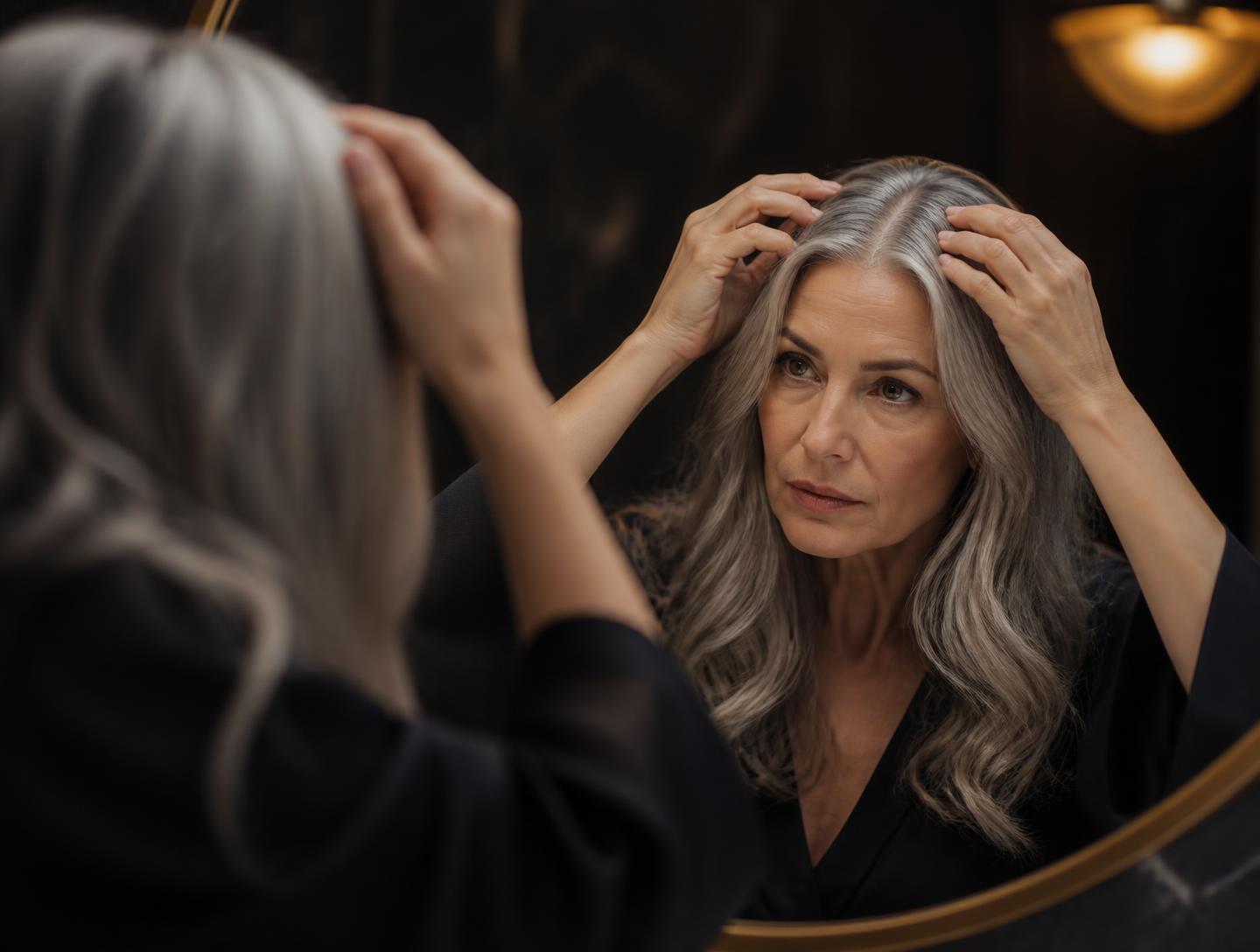
The hormonal shift behind the thinning
As estrogen and progesterone decline during perimenopause and menopause, the balance of hormones influencing hair follicles shifts as well. Estrogen and progesterone tend to support the hair's growth phase, so as they decline, relatively more influence is left for androgens — hormones that, in genetically susceptible follicles, can encourage gradual miniaturization, particularly at the crown and part line.
This is why menopausal hair thinning so often resembles a milder version of the pattern seen in genetic female hair loss: a widening part, reduced density at the crown, hair that feels finer overall — rather than sudden bald patches.
It's rarely hair alone
Menopause affects sleep, stress resilience, metabolism, and skin, and all of these can indirectly influence hair as well. Poor sleep and elevated stress can push more hairs into a resting phase, while changes in metabolism can shift nutritional needs. It's genuinely common for menopausal hair thinning to be the result of several of these threads converging in the same window of life, rather than hormones acting entirely alone.
This is part of why we resist offering a single blanket explanation to every woman going through this transition — the mix of contributors is rarely identical from one person to the next, even when the timing lines up similarly.
Why so many women feel unprepared for this
Menopause conversations have historically focused on hot flashes, mood, and sleep, leaving hair thinning as an afterthought that's rarely mentioned before it happens. Many women describe feeling blindsided — as though their hair thinning came out of nowhere, when in reality it's one of the more common, if underdiscussed, features of this life stage.
We think that silence has done women a disservice. Knowing this is a common and explainable part of the transition — rather than a personal failing or a mystery — changes how people approach it.
What an investigation looks like at this stage of life
For women navigating menopausal hair changes, we look at the full picture: hormonal timeline, scalp condition, stress and sleep patterns, and nutritional factors, rather than assuming hormones are automatically the whole story.
Our holistic trichology evaluations investigate potential contributors to hair and scalp concerns and complement the care of licensed healthcare professionals when medical evaluation or treatment is appropriate.
Dr. Leola and our team hear from women in this exact season of life every week, and one thing we say often: this is common, it's explainable, and it's absolutely worth investigating rather than quietly accepting.
It can progress gradually if left unaddressed, similar to genetic thinning, but many women see meaningful improvement in the fullness and health of their hair once contributing factors are identified and addressed.
Understanding your own hair begins with an investigation.
Trichologist Dr. Leola Anifowoshe-Brown, PhD
- Founder, Texas Hair Restoration & Wellness Center
- Founder, Capillorum Institute™
- Creator of Investigative Trichology™
- Author of The Hair Loss Detective
- PhD in Organizational Leadership and Development
- Doctorate in Christian Counseling
- Harvard Medical School Executive Education (Certificate Programs)
- Certified Trichologist
New educational resources, delivered quietly.
Join our reader list for new articles on hair and scalp health. Education only — no pressure, and you can unsubscribe any time.
Trichologist Dr. Leola Anifowoshe-Brown, PhD is available for television interviews, podcasts, print media, conferences, speaking engagements and educational commentary on Hair Loss, Scalp Health, Investigative Trichology™, Hair Restoration, Women's Hair Loss, Men's Hair Loss, Hair Health Education.
This article is provided for educational purposes only and is not intended to diagnose, treat, cure, or prevent any disease. HairInvestigations.com provides evidence-informed, holistic, non-medical educational resources. Individuals experiencing hair loss or scalp concerns should consult the appropriate qualified healthcare professional.