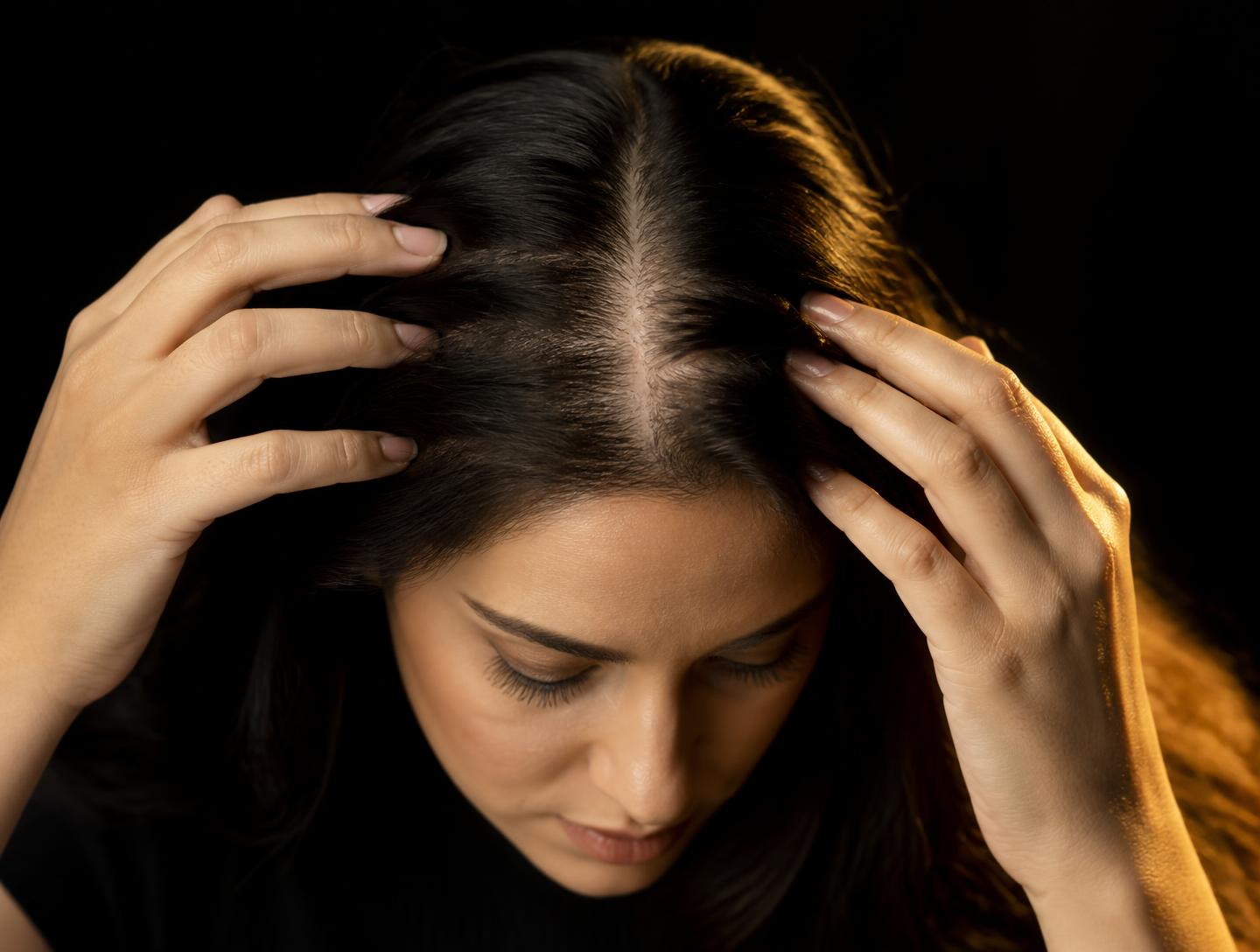
The pattern is usually diffuse, not a bald spot
When people picture hair loss, they often picture a man's receding hairline or a bald crown. Women's hair loss tends to look completely different — a widening part, a ponytail that feels noticeably thinner in the hand, more visible scalp under bright bathroom lighting. It's diffuse rather than localized, which makes it easy to second-guess yourself for months before you say anything out loud.
This difference matters because it means the standard image most people carry around in their heads doesn't match what's actually happening on their own scalp. Many women tell us they didn't take their thinning seriously at first because "it doesn't look like what my dad had" — and that delay in taking it seriously is one of the most common regrets we hear.
Hormones are almost always part of the story
Women experience more hormonal transitions across a lifetime than men do — menstrual cycle shifts, pregnancy, postpartum, breastfeeding, perimenopause, menopause, and thyroid changes that are more common in women overall. Each of these transitions can influence the hair growth cycle, sometimes pushing more strands into a resting or shedding phase.
Because hair loss triggered by hormonal shifts tends to show up two to four months after the actual event, women often don't connect their thinning to the pregnancy, the medication change, or the stressful season that happened months earlier. This is one of the most valuable pieces of detective work in any women's case: reconstructing an accurate timeline.
Genetic thinning in women looks subtle at first
Female pattern hair loss, the genetic form, tends to show up as a gradual widening at the part line and overall thinning at the crown, while the hairline itself often stays intact. Because it's gradual, it's frequently mistaken for "just getting older" or blamed on the most recent haircut or styling change, when the real driver has been building quietly for years.
Catching this pattern earlier rather than later tends to matter more for women's genetic thinning than almost any other type of hair loss, simply because there's more existing density to work with and protect.
Emotional weight deserves acknowledgment
We'd be doing women a disservice if we only talked about biology. Hair carries identity, femininity, and confidence in ways that are deeply personal, and losing it — even gradually — can feel disproportionately heavy compared to how it's often talked about medically. Many women describe feeling unheard by providers who wave off their concerns as cosmetic or minor.
That's part of why we built our practice the way we did. Dr. Leola Anifowoshe, PhD listens first, investigates second, and never treats a woman's concern about her hair as something too small to take seriously.
Our holistic trichology evaluations investigate potential contributors to hair and scalp concerns and complement the care of licensed healthcare professionals when medical evaluation or treatment is appropriate.
Yes. A significant portion of women experience noticeable hair thinning at some point, particularly around hormonal transitions like postpartum and perimenopause, but it's talked about far less openly than hair loss in men.
Understanding your own hair begins with an investigation.
Trichologist Dr. Leola Anifowoshe-Brown, PhD
- Founder, Texas Hair Restoration & Wellness Center
- Founder, Capillorum Institute™
- Creator of Investigative Trichology™
- Author of The Hair Loss Detective
- PhD in Organizational Leadership and Development
- Doctorate in Christian Counseling
- Harvard Medical School Executive Education (Certificate Programs)
- Certified Trichologist
New educational resources, delivered quietly.
Join our reader list for new articles on hair and scalp health. Education only — no pressure, and you can unsubscribe any time.
Trichologist Dr. Leola Anifowoshe-Brown, PhD is available for television interviews, podcasts, print media, conferences, speaking engagements and educational commentary on Hair Loss, Scalp Health, Investigative Trichology™, Hair Restoration, Women's Hair Loss, Men's Hair Loss, Hair Health Education.
This article is provided for educational purposes only and is not intended to diagnose, treat, cure, or prevent any disease. HairInvestigations.com provides evidence-informed, holistic, non-medical educational resources. Individuals experiencing hair loss or scalp concerns should consult the appropriate qualified healthcare professional.