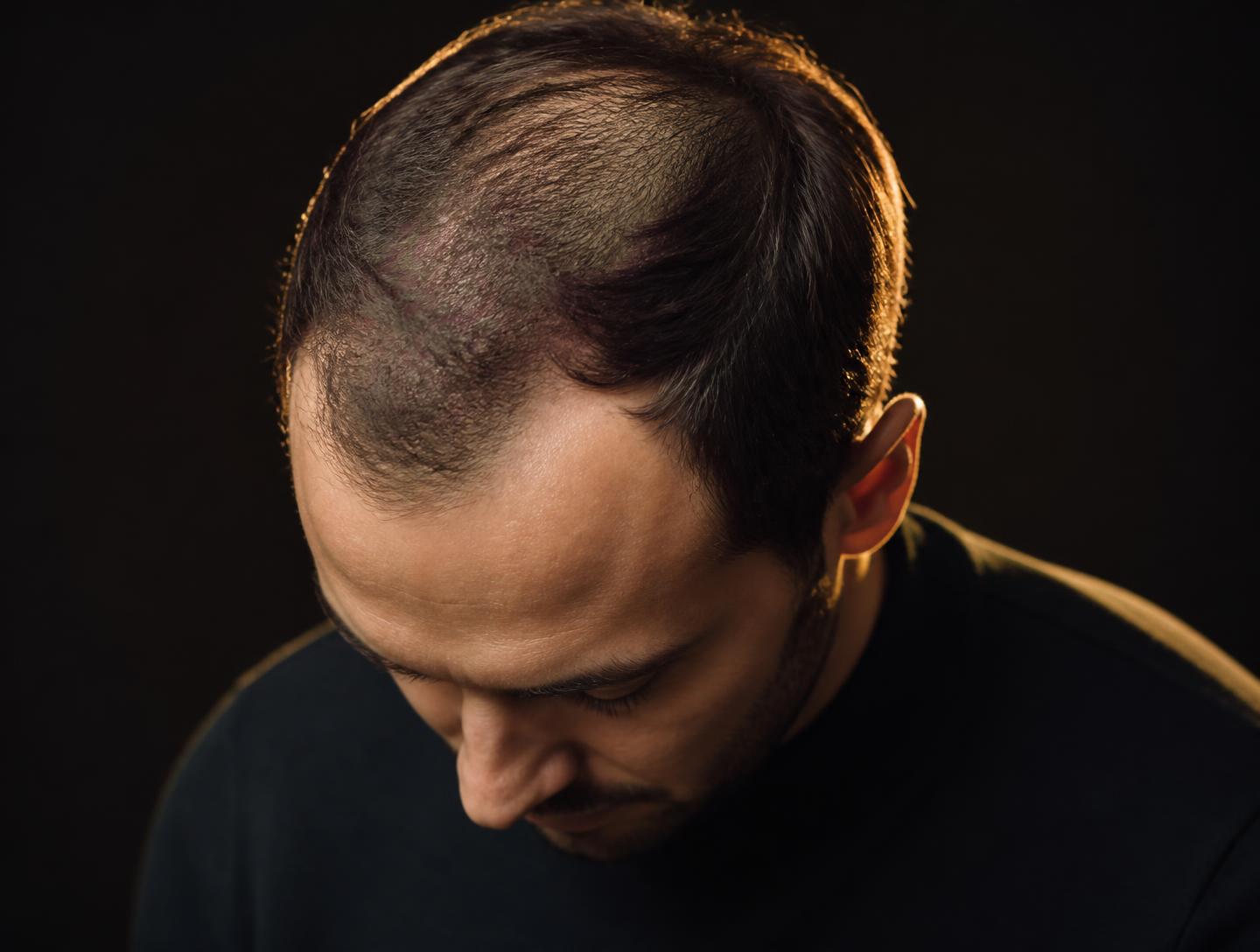
The pattern most men recognize
Male pattern hair loss, medically referred to as androgenetic alopecia, typically follows a recognizable path: recession at the temples that deepens into an M-shape, thinning at the crown, or both progressing together over years. It's genetic, it's common — affecting a large share of men by their fifties — and it tends to be progressive rather than sudden.
Because it's so familiar, many men assume any hair changes they're experiencing must be this same pattern. That assumption sometimes causes them to overlook other contributors that are compounding the picture, from scalp inflammation to stress-related shedding layered right on top of a genetic pattern.
What men tend to overlook
Men are statistically less likely than women to seek help early, often waiting until thinning is significant before doing anything about it. Part of this is cultural — hair loss in men is treated as inevitable, almost a rite of passage, which can discourage men from investigating whether something else might be accelerating it.
Stress, sleep disruption, poor nutrition, smoking, and even certain scalp conditions like seborrheic dermatitis or folliculitis can accelerate visible thinning or make an existing genetic pattern look worse than it would on its own. Sorting out how much of the picture is purely genetic versus compounded by other factors is exactly the kind of work a proper investigation is built for.
Timing matters more than most men realize
Because genetic thinning is progressive, the density you have today is generally easier to protect than density you've already lost is to bring back. Men who start paying attention at the first signs of recession or crown thinning are simply working with more to preserve than men who wait until the mirror confirms what they already suspected.
This isn't about panic — it's about not treating early hair changes as something to shrug off for another five years. A change worth noticing is a change worth investigating.
Where we come in
Our team looks past the assumption that thinning in men is "just genetics" and actually investigates the full picture — scalp condition, lifestyle factors, timeline, and family history — before drawing any conclusions.
Our holistic trichology evaluations investigate potential contributors to hair and scalp concerns and complement the care of licensed healthcare professionals when medical evaluation or treatment is appropriate.
Dr. Leola and our investigative team have sat across from enough men who waited years to ask questions about their hairline. The conversation is almost always easier — and more useful — earlier than later.
It varies widely, but many men notice the first signs — temple recession or crown thinning — anywhere from their late twenties through their forties. It can start earlier for some men with a strong family history.
Understanding your own hair begins with an investigation.
Trichologist Dr. Leola Anifowoshe-Brown, PhD
- Founder, Texas Hair Restoration & Wellness Center
- Founder, Capillorum Institute™
- Creator of Investigative Trichology™
- Author of The Hair Loss Detective
- PhD in Organizational Leadership and Development
- Doctorate in Christian Counseling
- Harvard Medical School Executive Education (Certificate Programs)
- Certified Trichologist
New educational resources, delivered quietly.
Join our reader list for new articles on hair and scalp health. Education only — no pressure, and you can unsubscribe any time.
Trichologist Dr. Leola Anifowoshe-Brown, PhD is available for television interviews, podcasts, print media, conferences, speaking engagements and educational commentary on Hair Loss, Scalp Health, Investigative Trichology™, Hair Restoration, Women's Hair Loss, Men's Hair Loss, Hair Health Education.
This article is provided for educational purposes only and is not intended to diagnose, treat, cure, or prevent any disease. HairInvestigations.com provides evidence-informed, holistic, non-medical educational resources. Individuals experiencing hair loss or scalp concerns should consult the appropriate qualified healthcare professional.