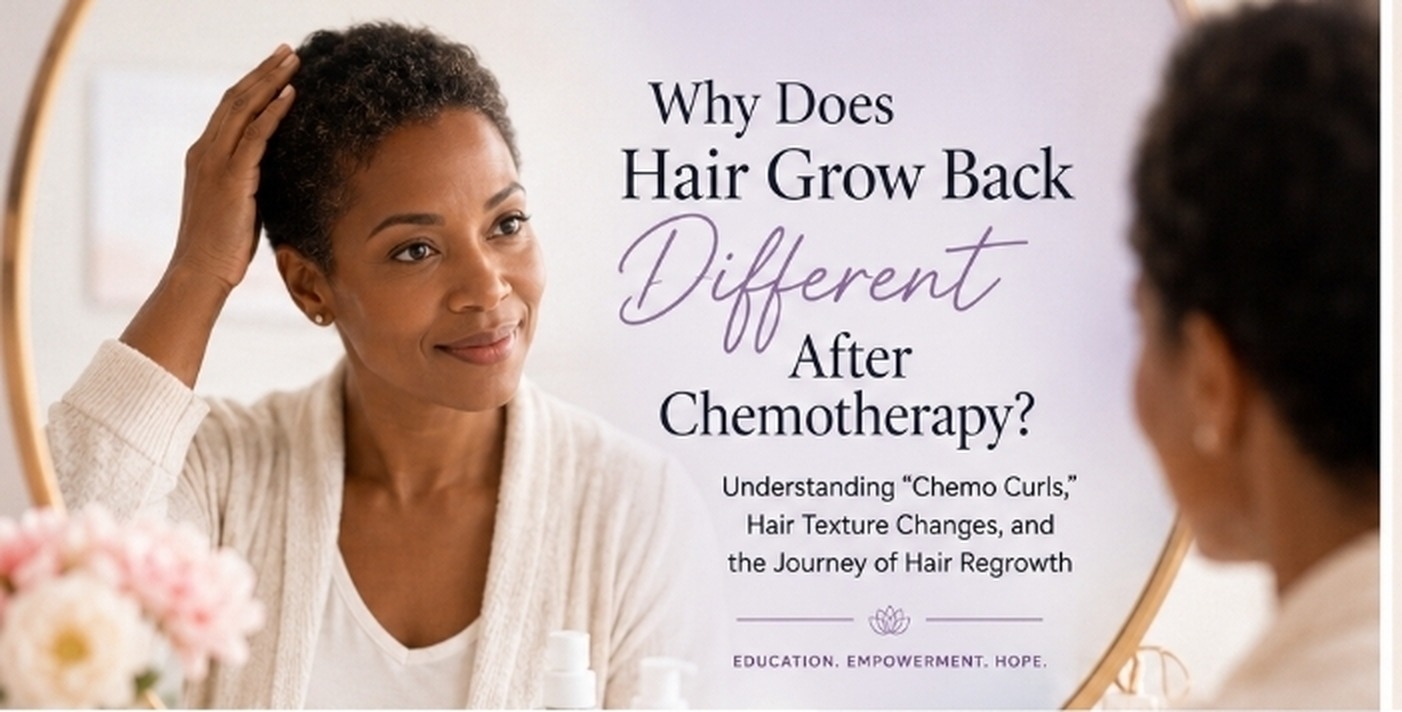
Hair regrowth is often the beginning of a new journey
For many people undergoing chemotherapy, ringing the bell or completing treatment marks the end of one difficult chapter. But another journey often begins quietly in the months that follow — waiting for their hair to return.
One of the biggest surprises for cancer survivors is that the hair that grows back may not look or feel like the hair they remember. Straight hair may become curly. Fine hair may appear thicker. Dark hair may return lighter, or gray hair may seem more noticeable. These changes can be unexpected and sometimes emotional.
The good news is that these experiences are common, and for many people, they are a normal part of the hair regrowth process.
What are "chemo curls"?
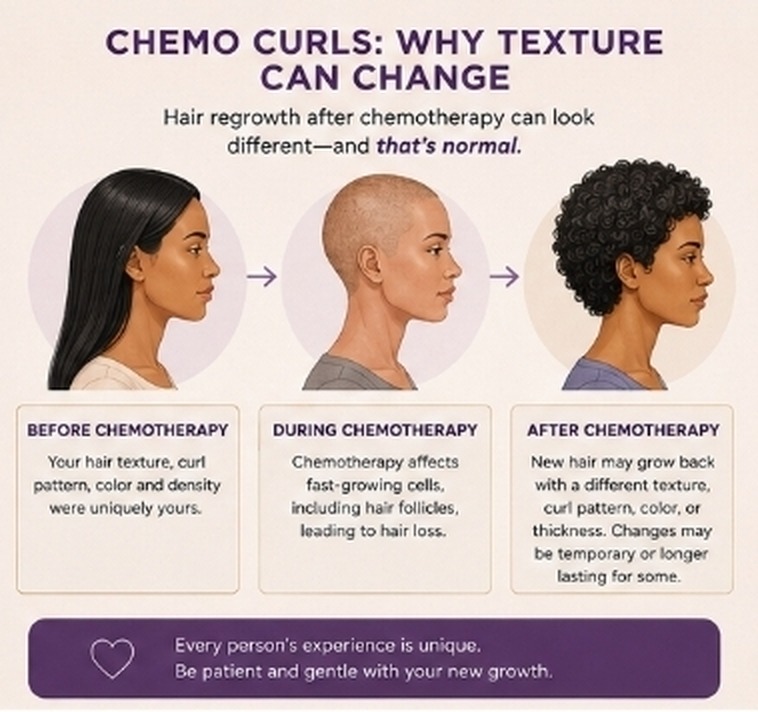
Many cancer survivors use the term "chemo curls" to describe hair that grows back curlier or with a different texture after chemotherapy.
Although the exact reason is not fully understood, experts believe that temporary changes within the hair follicle during recovery may influence how newly forming hair shafts develop.
Some individuals notice curlier hair than before treatment, straighter hair after previously having curls, increased coarseness or softness, changes in hair thickness, temporary differences in color, and uneven growth patterns during the early months of regrowth.
These changes may gradually evolve as the hair growth cycle normalizes, although each person's experience is unique.
Why does hair grow back differently?
Hair follicles are among the fastest-growing structures in the body, which is one reason chemotherapy often affects them.
As hair follicles recover following treatment, newly growing hairs may initially behave differently while the follicles gradually return to their normal growth cycle.
Many survivors notice changes in hair texture, curl pattern, diameter, pigmentation, growth rate and density. For some individuals, these changes are temporary. Others may find that certain characteristics persist longer than expected.
Caring for your hair during regrowth
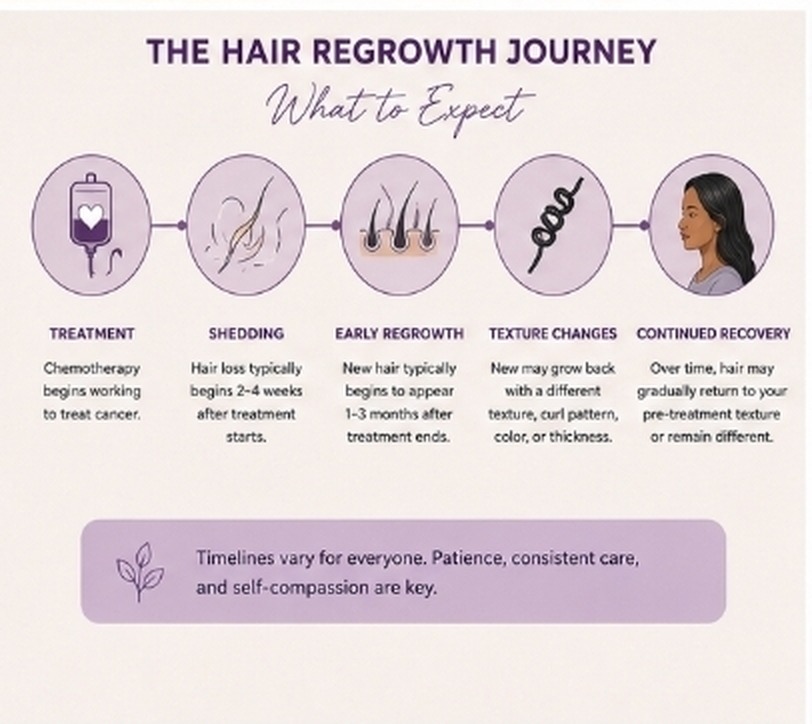
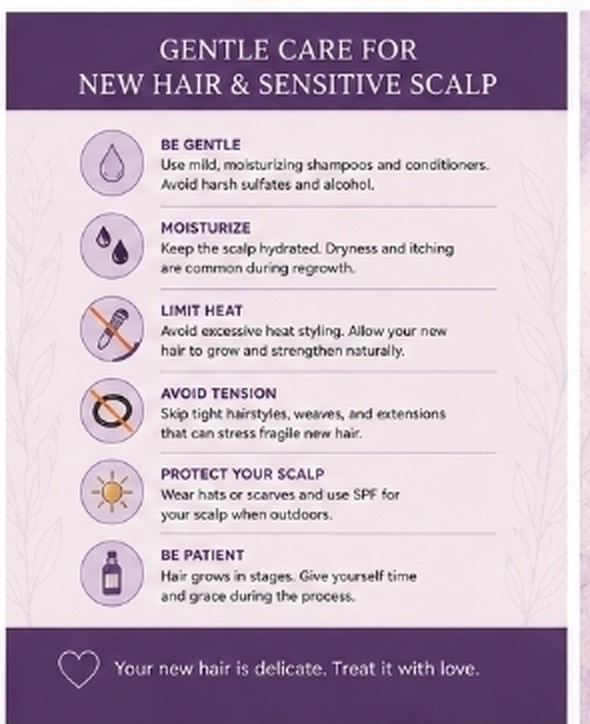
Newly growing hair is often delicate. Gentle care can help protect both the scalp and emerging hair fibers during recovery.
General recommendations include using mild, moisturizing shampoos; avoiding excessive heat styling whenever possible; limiting tight hairstyles that place unnecessary tension on fragile new hair; protecting the scalp from sun exposure; and keeping the scalp moisturized if dryness develops.
Introduce coloring or chemical services only after discussing timing with your healthcare team and consulting a qualified hair care professional.
Patience is important. Hair regrowth often continues to improve over many months.
Your scalp may be different too
Many people focus on the hair itself, but the scalp also undergoes recovery.
Some survivors experience dryness, increased sensitivity, itching, temporary flaking, or changes in oil production.
Gentle scalp care may help improve comfort while hair continues to grow.
The emotional side of hair regrowth
Hair is deeply connected to identity. Many cancer survivors describe looking in the mirror and feeling as though they are seeing a different version of themselves.
Even when hair begins returning, unexpected changes in texture or appearance can trigger mixed emotions. Some people celebrate every new strand. Others struggle because the reflection in the mirror still feels unfamiliar.
These feelings are valid. Hair recovery is not only physical — it can also be emotional. Support from loved ones, healthcare professionals, and knowledgeable hair specialists can make this transition easier.
When should you seek professional guidance?
If hair regrowth seems unusually delayed, or if you have ongoing scalp concerns after completing treatment, discuss your questions with your oncology team. An oncologist is best positioned to address questions related to chemotherapy treatment and recovery.
A qualified trichologist may also provide education regarding scalp health, gentle hair care practices, and supportive strategies during the regrowth process.
Because every individual's medical history is unique, personalized guidance is always recommended.
Hope after hair loss
Hair regrowth following chemotherapy is rarely identical for everyone. For many survivors, every new strand represents resilience, healing, and hope.
Whether your hair returns curly, straight, thicker, finer, lighter, or darker than before, remember that recovery is a journey — not a race. Be patient with yourself. Celebrate progress. And know that you do not have to navigate the journey alone.
- Hair that returns after chemotherapy may differ in texture, curl pattern, thickness or color — and for many people this is a normal part of regrowth.
- "Chemo curls" describe hair that grows back curlier or with a different texture; changes may continue to evolve as the growth cycle normalizes.
- Newly growing hair is fragile: gentle cleansing, minimal heat, loose styling and sun protection support the scalp during recovery.
- The scalp recovers too — dryness, sensitivity and flaking are commonly reported during early regrowth.
- Hair recovery is emotional as well as physical, and support makes the transition easier.
- Questions about treatment and recovery belong with your oncology team; a trichologist can support scalp and hair care education alongside that care.
Not necessarily. Some people's hair gradually returns to its previous texture over time, while others notice longer-lasting changes.
- 1.Hair Loss (PDQ®) — Patient VersionNational Cancer Institute (NCI), U.S. National Institutes of Health
- 2.Chemotherapy and hair loss: what to expect during treatmentAmerican Cancer Society
- 3.Hair biology and the hair growth cycleAmerican Academy of Dermatology Association
Understanding your own hair begins with an investigation.
Trichologist Dr. Leola Anifowoshe-Brown, PhD
- Founder, Texas Hair Restoration & Wellness Center
- Founder, Capillorum Institute™
- Creator of Investigative Trichology™
- Author of The Hair Loss Detective
- PhD in Organizational Leadership and Development
- Doctorate in Christian Counseling
- Harvard Medical School Executive Education (Certificate Programs)
- Certified Trichologist
New educational resources, delivered quietly.
Join our reader list for new articles on hair and scalp health. Education only — no pressure, and you can unsubscribe any time.
Trichologist Dr. Leola Anifowoshe-Brown, PhD is available for television interviews, podcasts, print media, conferences, speaking engagements and educational commentary on Hair Loss, Scalp Health, Investigative Trichology™, Hair Restoration, Women's Hair Loss, Men's Hair Loss, Hair Health Education.
This article is provided for educational purposes only and is not intended to diagnose, treat, cure, or prevent any disease. HairInvestigations.com provides evidence-informed, holistic, non-medical educational resources. Individuals experiencing hair loss or scalp concerns should consult the appropriate qualified healthcare professional.